
The OpenFox® NextGen Sex Offender Registry dramatically reduces the need for updating convicted offenders’ information across municipalities, state databases, national registries, and more. This means fewer opportunities for error and fewer workforce hours spent on data entry. Ultimately, better information means better protection from sex crimes and safer communities.

Additional Product Capabilities
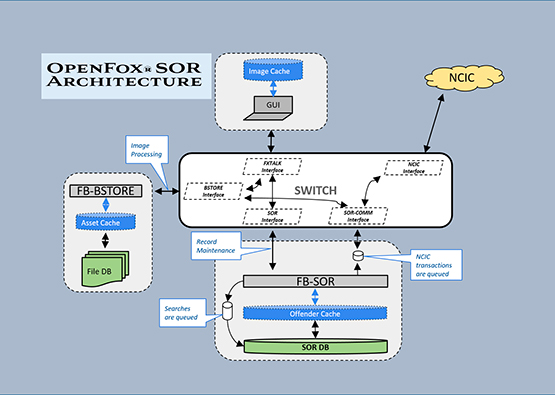
The OpenFox NextGen SOR solution is CJIS and SORNA compliant out of the box and easily configurable to meet the requirements of any agency, county, state, or national level standards. The OpenFox SOR operates quickly, securely, and efficiently. Here are some of the major components that ensure top performance levels:
Interfaces
- Direct TCP/IP (FoxTalk) and rotored connections
- Faster & more reliable than the Insert & Poll Database model
JSON
- Front-end and Fennec Broker exchange messages in JSON
- Reduces the bytes sent through the Switch, over the wire, and stored in Archive
Modern Processing Methods
Parallel Processing
- Distinct processing channels for: searches, record maintenance, NCIC syncing and image / binary asset processing.
- Small jobs are processed while long ones run in the background. For example, while saving a record, the NCIC syncs keep running smoothly.
Queuing / Throttling
- Searches and NCIC syncs are queued
- Throttling the syncs & searches ensures the system won’t be overwhelmed
Caching
- Works similarly to web browsers and images
- Less load on server & bandwidth means faster performance for users
- GUI caches offender images
- Fennec Broker caches frequently requested offender records and data

Sex Offender Registry In Action
This OpenFox® product is currently in use by:
Idaho State Police
West Virginia State Police
Illinois State Police
And Many More
Features Overview
OpenFox NextGen SOR was designed & developed with a careful focus on reliability, the NCIC Data Model, Optimum Performance, and Transparency. CPI also developed a new patented NCISync technology (U.S. Patent No. 12,554,743) to ensure the emergence of a superior COTS product that realizes the same elite quality, trust, and standards as our other market-leading products offered in the OpenFox® Product Suite. SOR NextGen features the following search options:
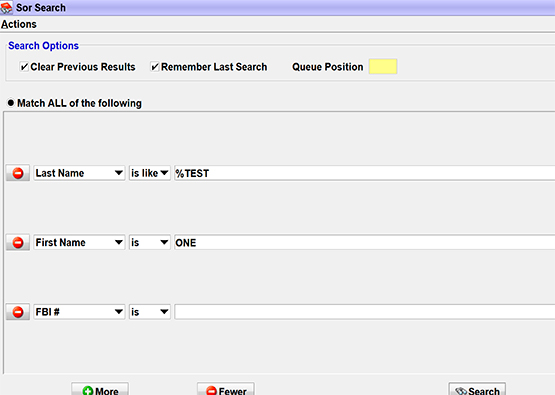
- Clear Previous Results — user preference. Removes the current results displayed within the details window.
- Remember Last Search — user preference. Remembers the last search run, including if you sign on from a different terminal or machine failure.
- Queue Position Box — searches are queued (if necessary – virtually all search results are delivered immediately), so vital functionalities within the system are not compromised.
- Robust Configurable Searches — Choose criteria from a list of configurable fields. Add criteria and dynamic search conditions. Enter keywords and filters in a search value field
Search Queries
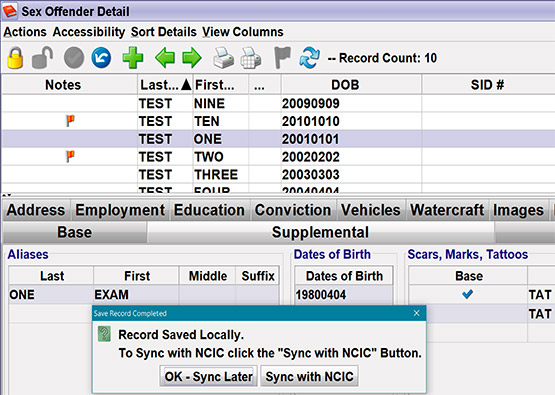
Base Record Indicator For supplemental information, the user can simply indicate which value they need to be synced with NCIC as the base value.
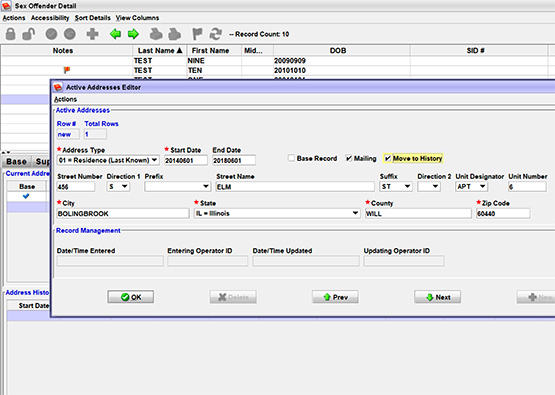
Move To History Supplemental data, such as an address, can be easily stored as a historical archive by clicking a checkbox.
Image Handling A local encrypted caching mechanism has been built into the software. When loading a record, images are not downloaded until they are needed, so response times are swift, & the GUI remains accessible.
Printing Records: The default print behavior uses the Jasper Reports technology. A robust reporting tool that is highly configurable. This also allows us to create decadent displays that include in-line imaging.

Want To Know More?
If you are looking to acquire a sex offender registry system that is CJIS-compliant and delivers quick, reliable information, contact CPI OpenFox today. Feel free to reach out to us for more information about our SOR NextGen solution or to get started with implementation.
Centralized Data Repository
All offender records, including offense history, supervision status, court orders, and rehabilitation programs, are stored in one secure system.
Automated Alerts & Notifications
Automatic reminders for court appearances, compliance check-ins, and when court-mandated requirements are due.
Role-Based Access Controls
Granular permissions allow agencies to share data securely while restricting access based on role, reducing the risk of unauthorized disclosure.